The Great Chicago Fire
The Chicago fire disaster, which began on October 8, 1871, and raged until early October 10, devastated a significant portion of the city.
In the mid-19th century, Chicago experienced remarkable growth, with the population soaring from around 30,000 in 1850 to nearly triple that figure just a decade later. Affordable transportation encouraged middle-class families to move to the outskirts, while poor neighborhoods near downtown became overcrowded. Many structures in these areas were built of wood, making them particularly vulnerable to fires. However, none could compare to the blaze that ignited on October 8. Months of drought had parched the landscape, and the intense heat, combined with a major fire the previous night, had exhausted firefighters and damaged their equipment.
.
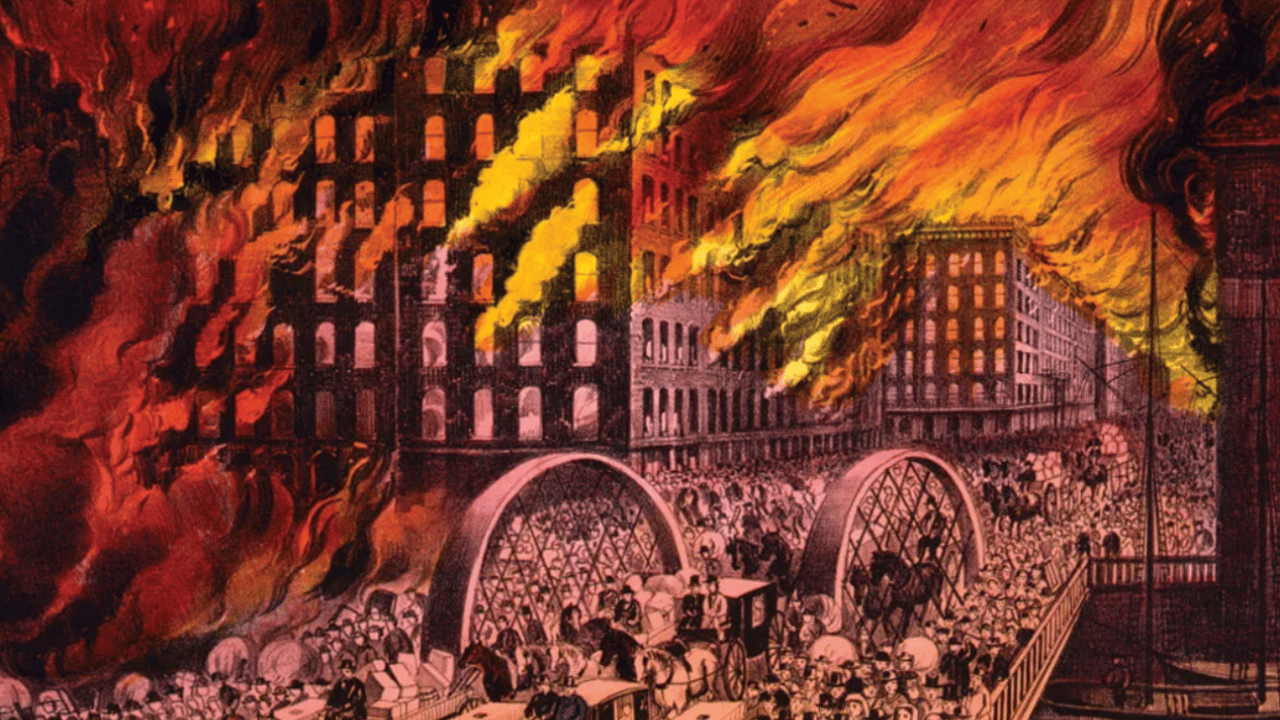
The Great Chicago Fire began on the city’s West Side, in the De Koven Street barn of the O’Leary family, though it is not known the real cause of how the blaze started. Misdirected fire equipment arrived too late, and a steady wind from the southwest carried the flames and blazing debris from block to block. The slums became kindling for the downtown conflagration, where even the supposedly fireproof stone and brick buildings exploded in flames as the destruction swept northward. Only rainfall, the lake, and stretches of unbuilt lots on the North Side finally halted the wave of destruction on the morning of October 10.
The Chicago fire, the most famous in American history, claimed about 300 lives, destroyed some 17,450 buildings covering almost 3.5 square miles (9 square km), and caused more than $200 million in damage. Roughly one-third of the city laid in ruins, and an equal proportion of the population, nearly 100,000 people, was homeless.
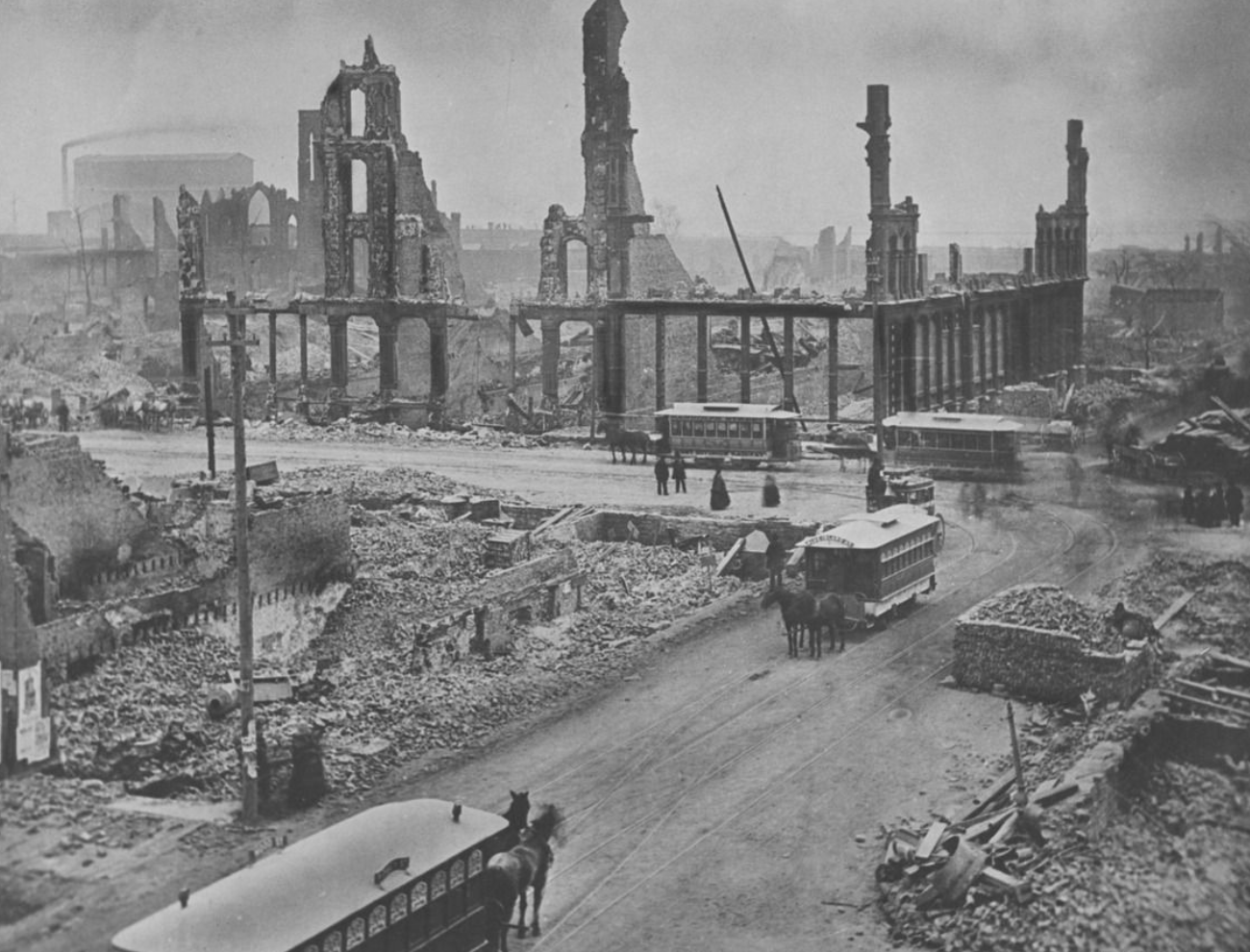
While the fire had devastated the downtown and North Side of Chicago, the stockyards and lumberyards on the South and West sides remained intact. The city rebuilt quickly, and by 1880 its population had reached a half million. A new generation of even taller downtown buildings became under construction. Department stores and offices crowded into the central area, and industrial growth along the river branches and rail lines grew rapidly.
Since 1922, the NFPA has sponsored the public observance of Fire Prevention Week. In 1925, President Calvin Coolidge proclaimed Fire Prevention Week a national observance, making it the longest-running public health observance in our country. During Fire Prevention Week, children, adults, and teachers learn how to stay safe in case of a fire. Firefighters provide lifesaving public education in an effort to drastically decrease casualties caused by fires.
Relevant Ruhrpumpen´s Fire Projects from October 2024
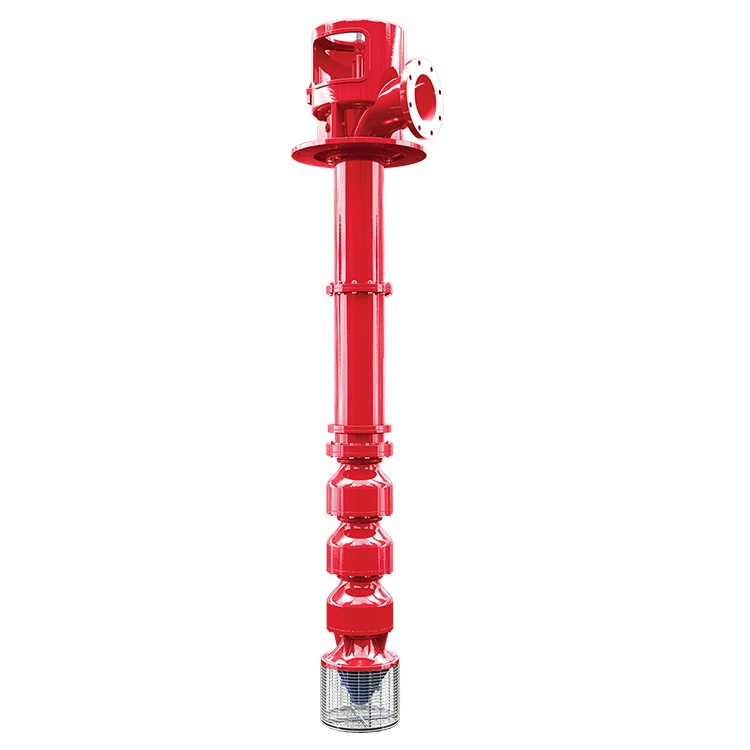
The VTP pump line is specifically designed for operation in wells or sumps. Its bowl assembly features a suction case or bell, one or more pump bowls, and a discharge case. This assembly is positioned at an appropriate depth in the sump or well to ensure proper submergence. These vertical turbine pumps, available in both single and multi-stage configurations, are ideal for firefighting applications. They are UL listed and FM approved for suction lift conditions and can be powered by either diesel or electric drive.
.
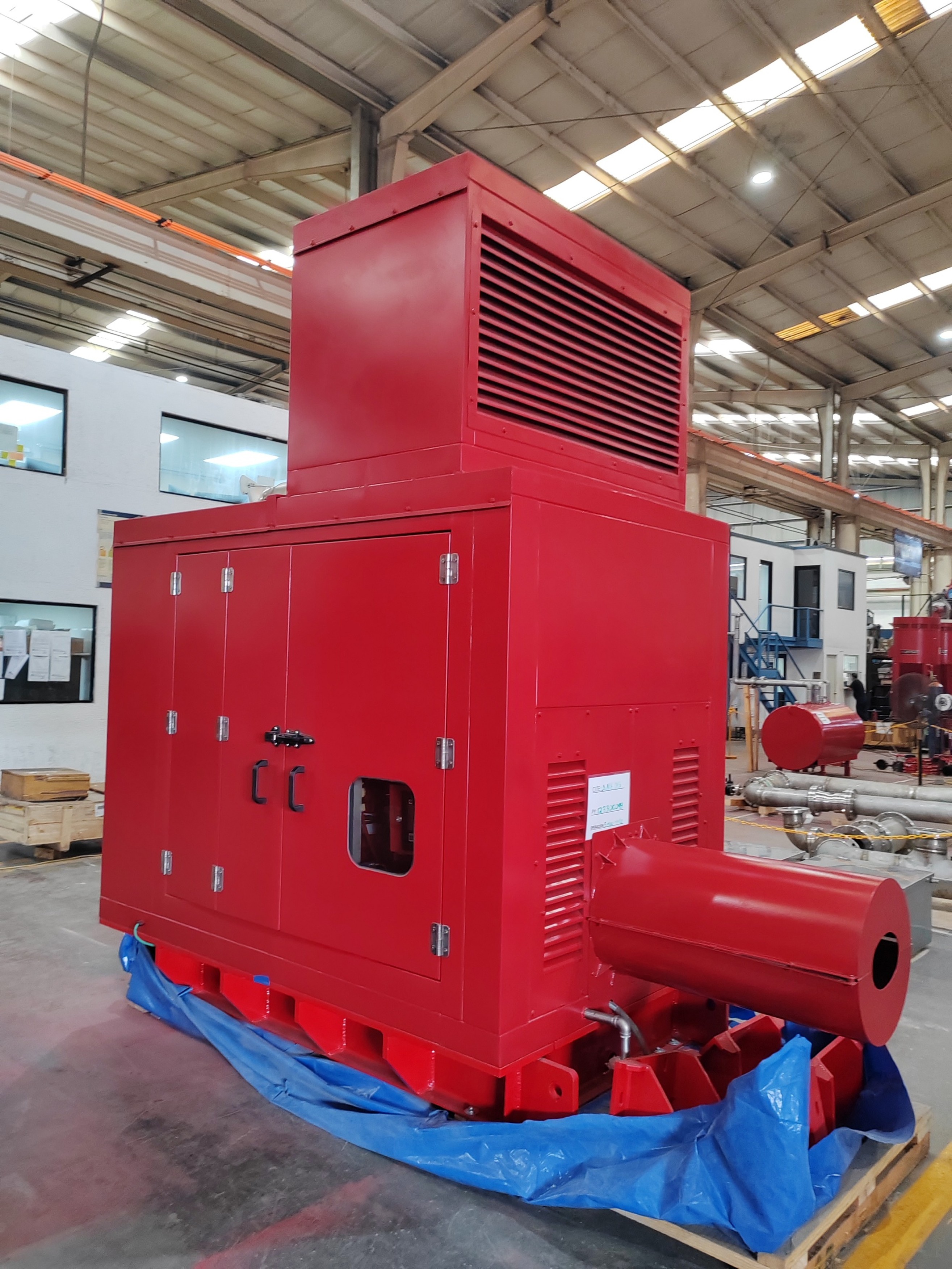
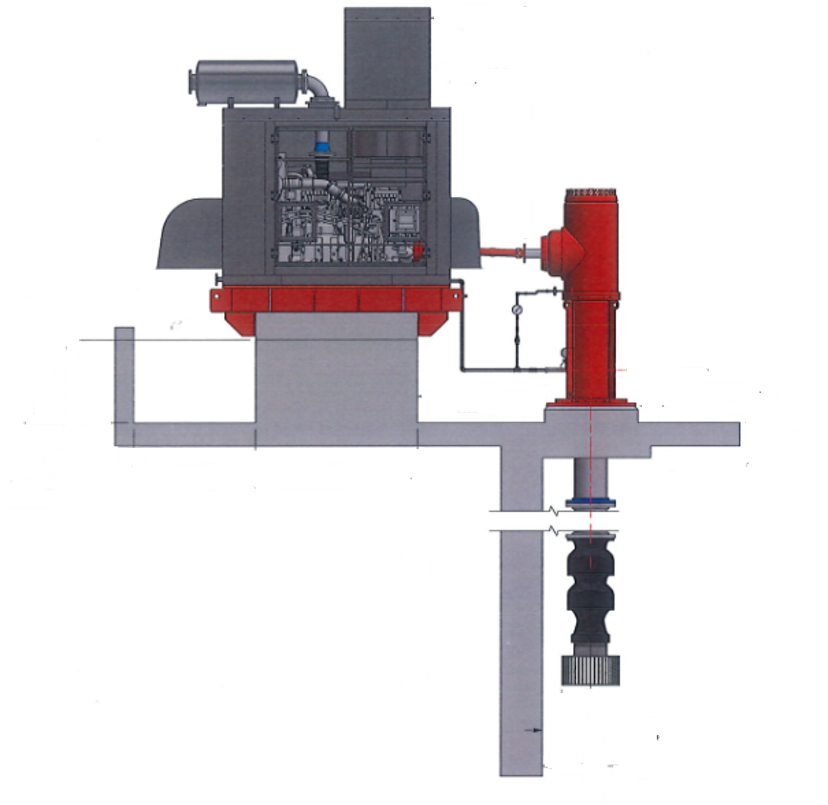
The vertical turbine portrayed above is a Ruhrpumpen VTP model size 20C-600, with a rated flow of 3,500 gpm, equipped with a noise enclosure to provide noise attenuation to the engine as well as protection from the environment.
Applications: Commercial, municipal and residential high-rise buildings, Large industrial premises and storage warehouses, Offshore and remote facilities, Airports, Power stations.
CHARACTERISTICS
- Stuffing box machined with bushing to guide shaft
- Discharge head provides support for motor and entire pump
- Column connections can be flanged or threaded with coupling
- Bearings available in a variety of materials
- Line shaft couplings machined from solid steel stock
- Column assembly manufactures in-plant to ensure accurate fit
- Sleeve bearings to provide long life and low friction
- Enclosed impellers designed for long life and high efficiency
- Standard tapered collets to secure impeller to pump shaft
- Suction bowl that provides rigid support of the lower end of the pump shaft
- Strainer to prevent entry of foreign objets into pump suction
- Diesel or electric driven
Ruhrpumpen's vertical turbine fire pumps are available as single pumping units or complete pre-packaged fire systems (with or without enclosure). See more details of the VTP Pump doing click here.
Relevant Ruhrpumpen´s Fire Projects
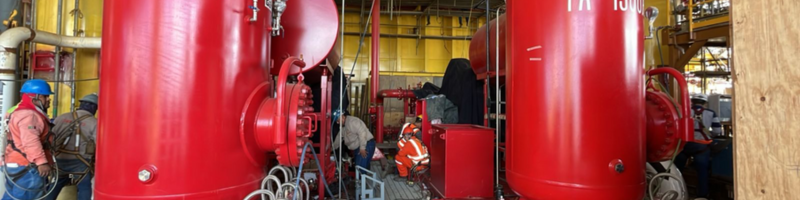
Offshore fire suppression application.
The pumps were supplied in a packaged, open skid configuration, with integrated systems such as:
- Common baseplate for pump driver and accessories.
- Pre-wired UL&FM pump controllers.
- Discharge piping with non-return valve.
- Air release and vacuum breaker valve.
- Main relief valve & waste cone.
- Fuel tank along with supply and return lines.
- Pressure sensing lines.
- Cooling lines for diesel engine and right-angle gear drive.
- Primary electric starting system with dual battery banks.
- Secondary pneumatic starting system, inclusive of air accumulator.
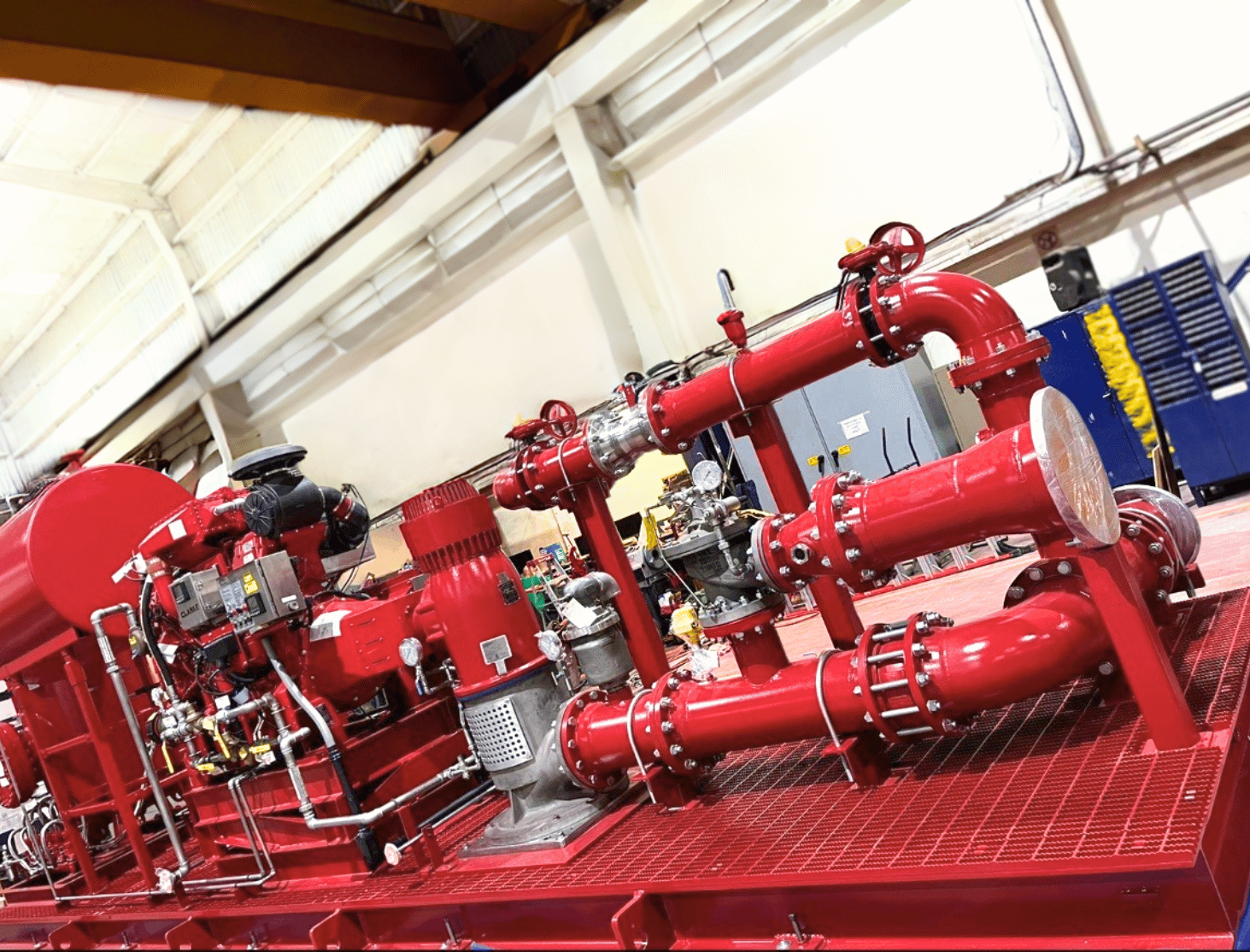
The pumps were delivered to an offshore platform in the Gulf of México. When emergencies occur, it’s better to be prepared. One more customer that relies on the efficiency of our firefighting equipment. The Oil & Gas Industry includes the global processes of exploration, extraction, refining, transportation, and marketing of petroleum products.
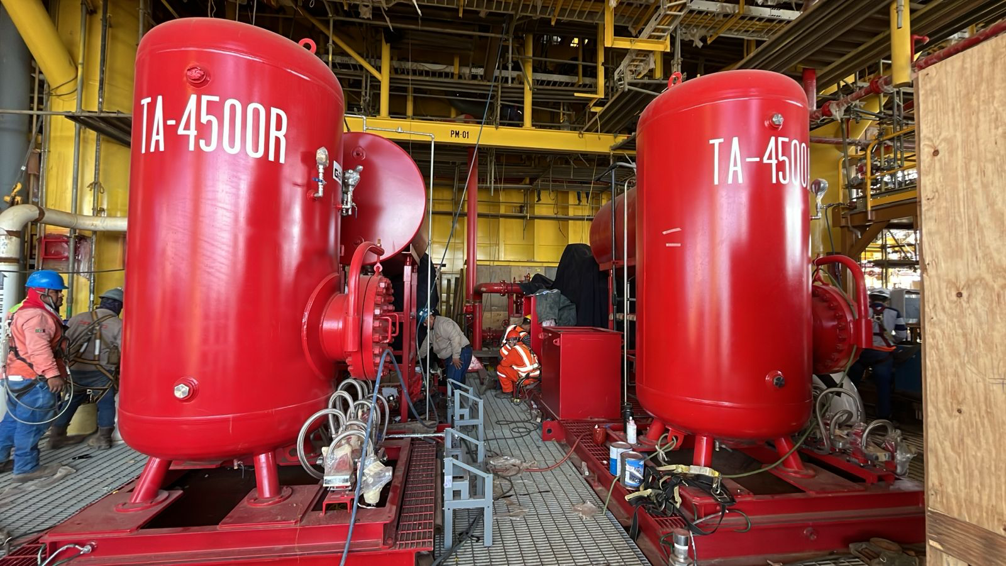
The largest volume products of the industry are fuel oil and gasoline. Oil is crucial to the global economic framework, impacting everything from transportation to heating and electricity to industrial production and manufacturing.
Contact Ruhrpumpen for any of your urgent pumping needs… we are here to help you! Find more information about our Fire Pumps and Systems here.
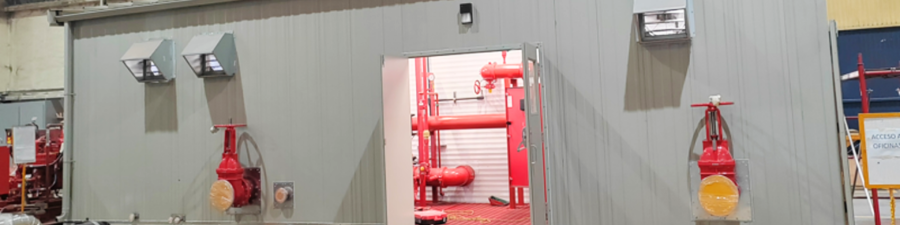
Cutting-Edge Pump House Solution for a Jakarta Refinery
Ruhrpumpen has recently delivered a cutting-edge ETL Listed prepackaged pump house to a refinery in Jakarta, designed to meet the fire protection requirements of the oil and gas sector. The pump house includes both electric and diesel engine-driven fire pumps, along with a jockey pump, ensuring robust fire suppression capabilities. The system is housed in a compact unit measuring 8’-2” wide x 40’-0” long x 11’-0” high, featuring a durable shed-style roof and fully insulated walls and roof for efficient thermal management.
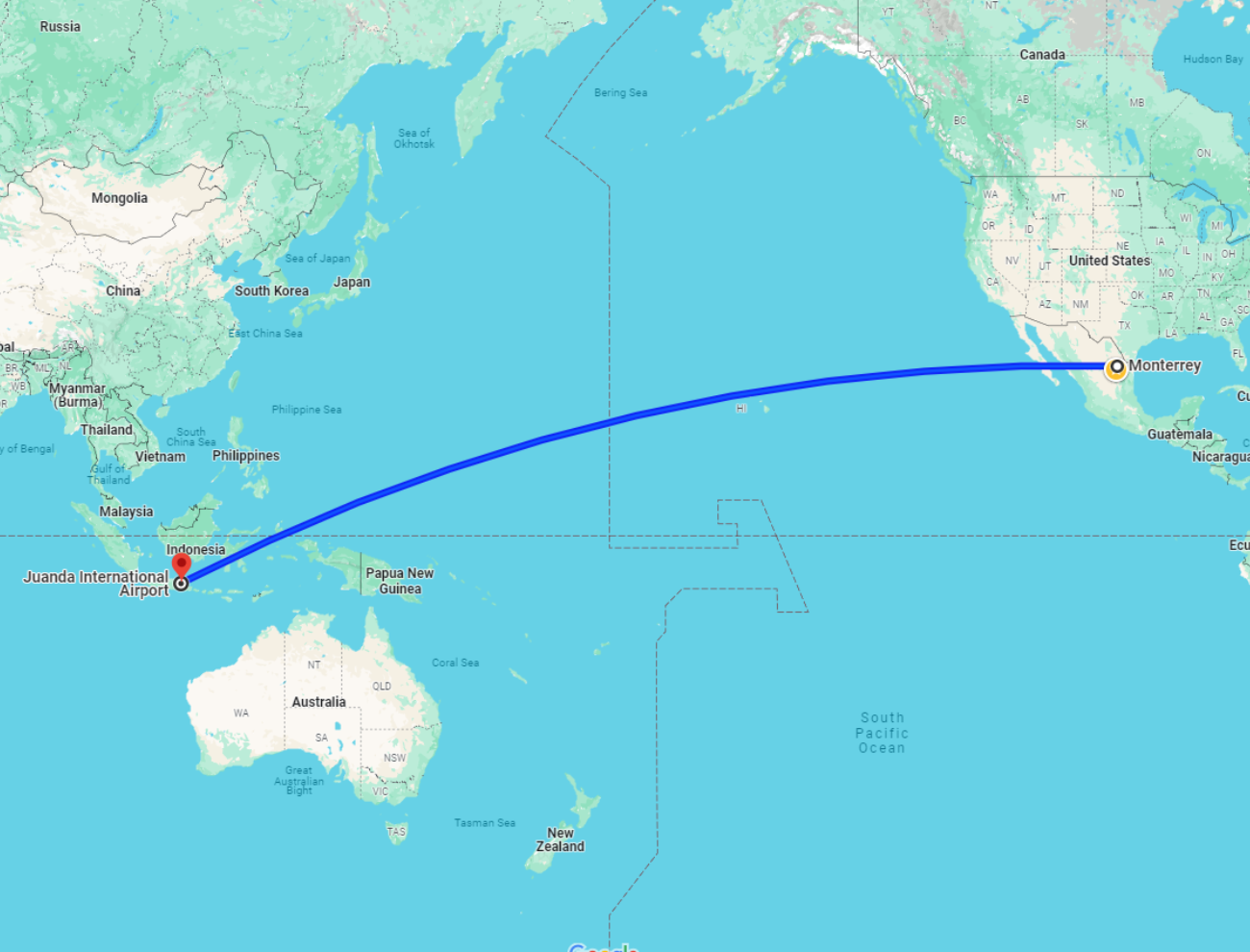
The electric set in this installation comprises a Horizontal Split Case pump constructed from cast iron and stainless steel, driven by a 185 kW motor operating at 3000 RPM. The motor is designed to IEC standards, featuring Totally Enclosed Fan Cooled (TEFC) construction with IE3 efficiency, and is controlled by a Tornatech GPA controller housed in a NEMA 2 enclosure. This configuration ensures reliable performance and compliance with industry efficiency and safety standards.
Complementing the electric set is a diesel-driven Horizontal Split Case pump, also made from cast iron and stainless steel, with a JU6H-UF94 motor delivering 300 hp at 3000 RPM. The diesel engine meets emission standards, reflecting an emphasis on environmental considerations alongside operational efficiency. Control is managed by a Tornatech GPD controller, ensuring seamless integration with the system’s safety protocols.
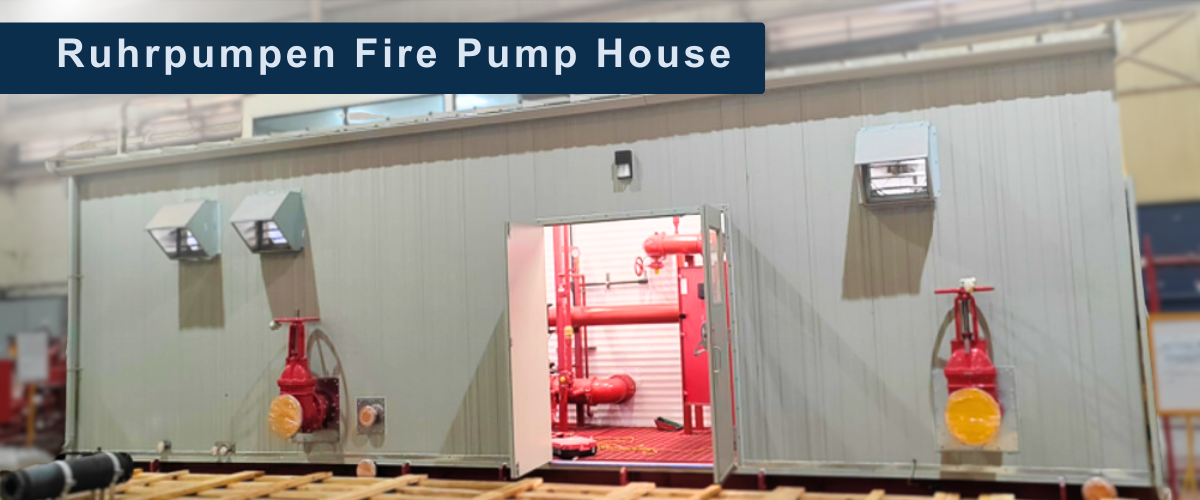
The jockey pump, an essential component for maintaining system pressure, is an End Suction model made from ductile iron, driven by a 30 kW motor at 3000 RPM. It features TEFC construction, controlled by a Tornatech JP3 controller. This setup is crucial for the system's readiness, maintaining pressure and ensuring immediate response in the event of a fire.
The pump house is meticulously designed for operational efficiency and ease of maintenance, incorporating Ruhrpumpen’s standard fuel supply lines, electrical interconnections, and sensing lines. It includes essential features such as resilient OS&Y Gate valves, discharge butterfly isolation valves with tamper switches, and a pump house sprinkler system compliant with NFPA 13 standards. This comprehensive solution underscores Ruhrpumpen’s commitment to providing reliable, high-performance fire protection systems tailored to the needs of critical infrastructure in the oil and gas industry.
CPO/VSP pumps.
CPO
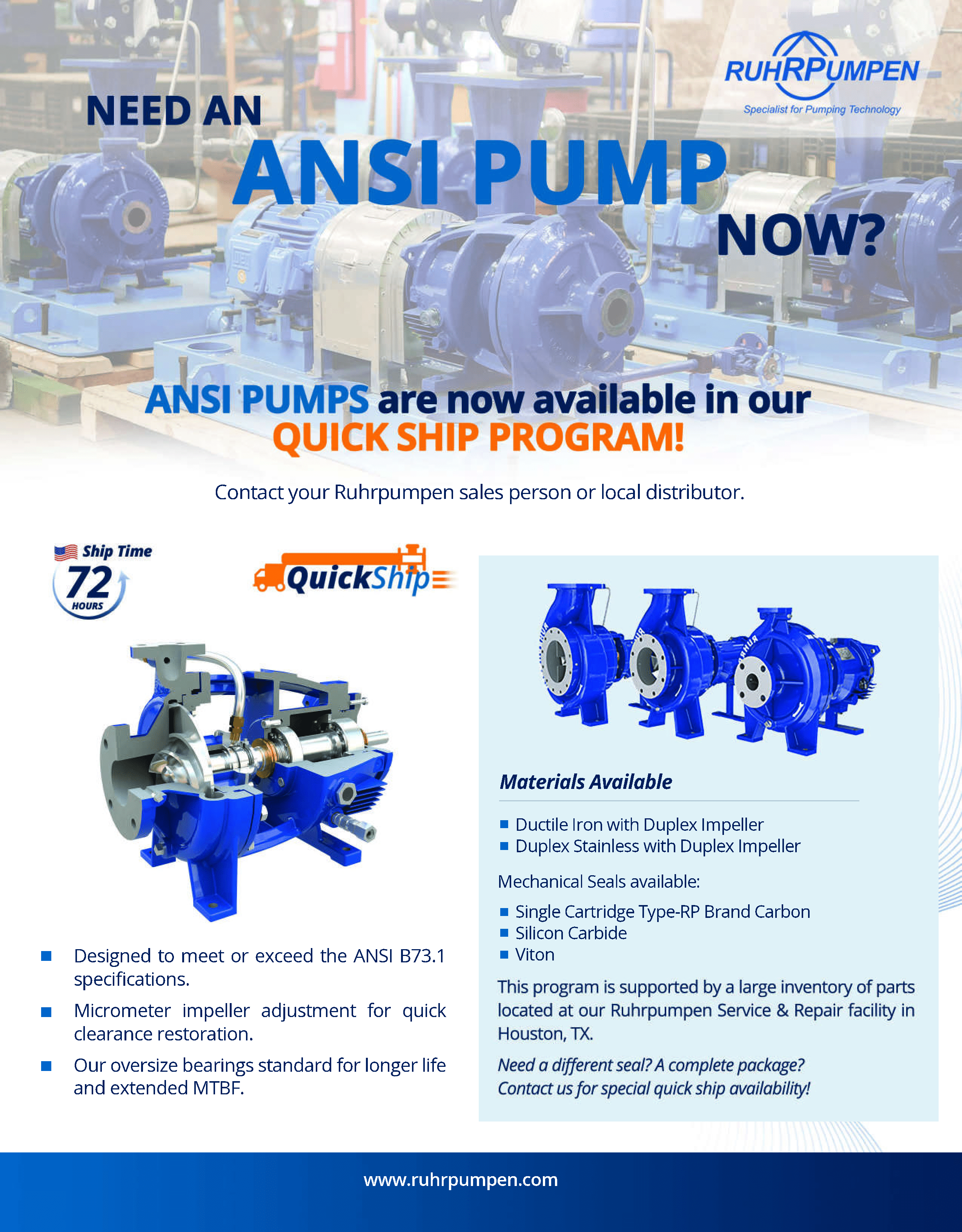
Highly successful Quick Ship Program ANSI Pump.
Make your order here:
CPO
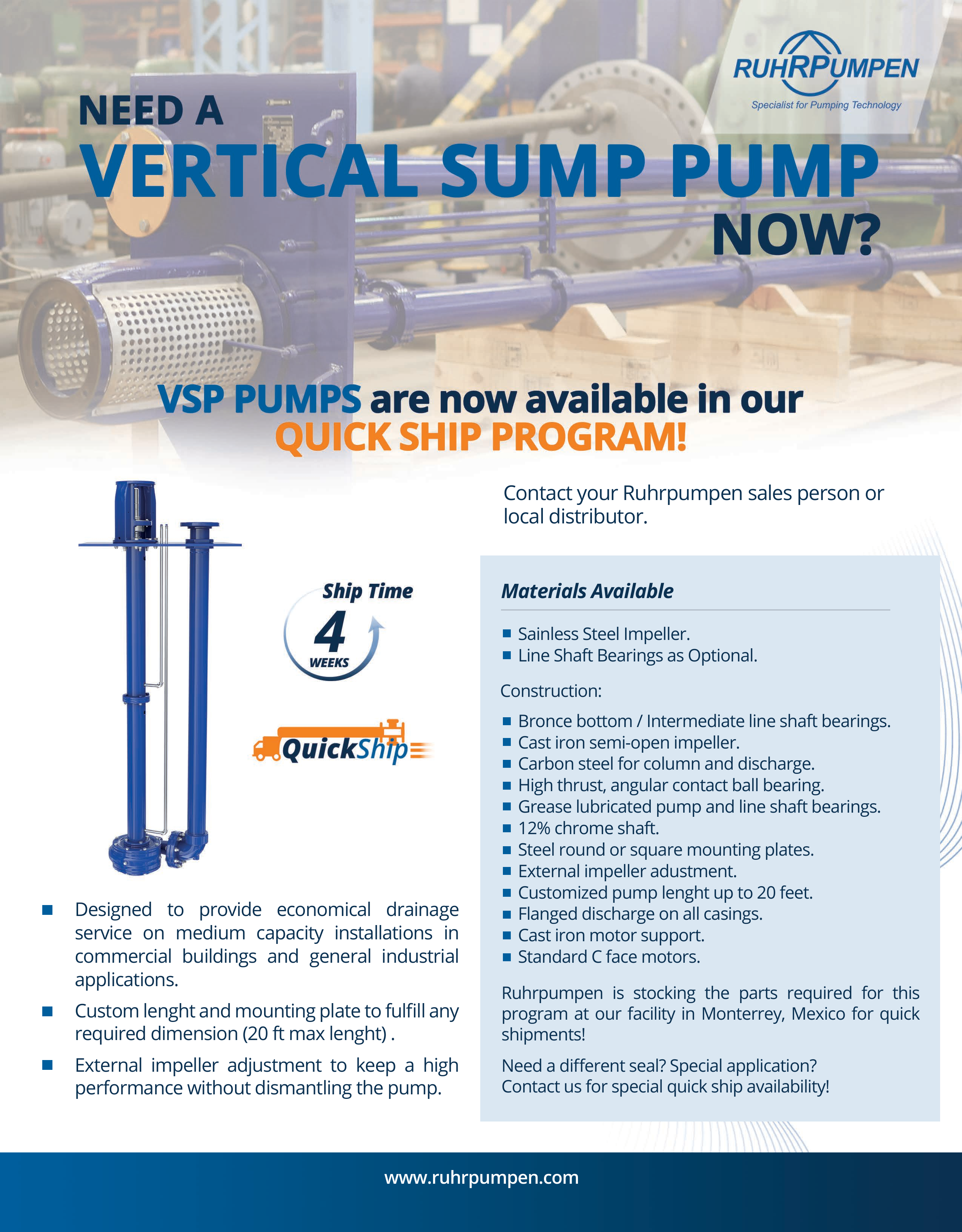
Quick Ship Program VSP pump
Make your order here: