
Fire Pump Annual Flow Testing
Ruhrpumpen’s Fire Campus
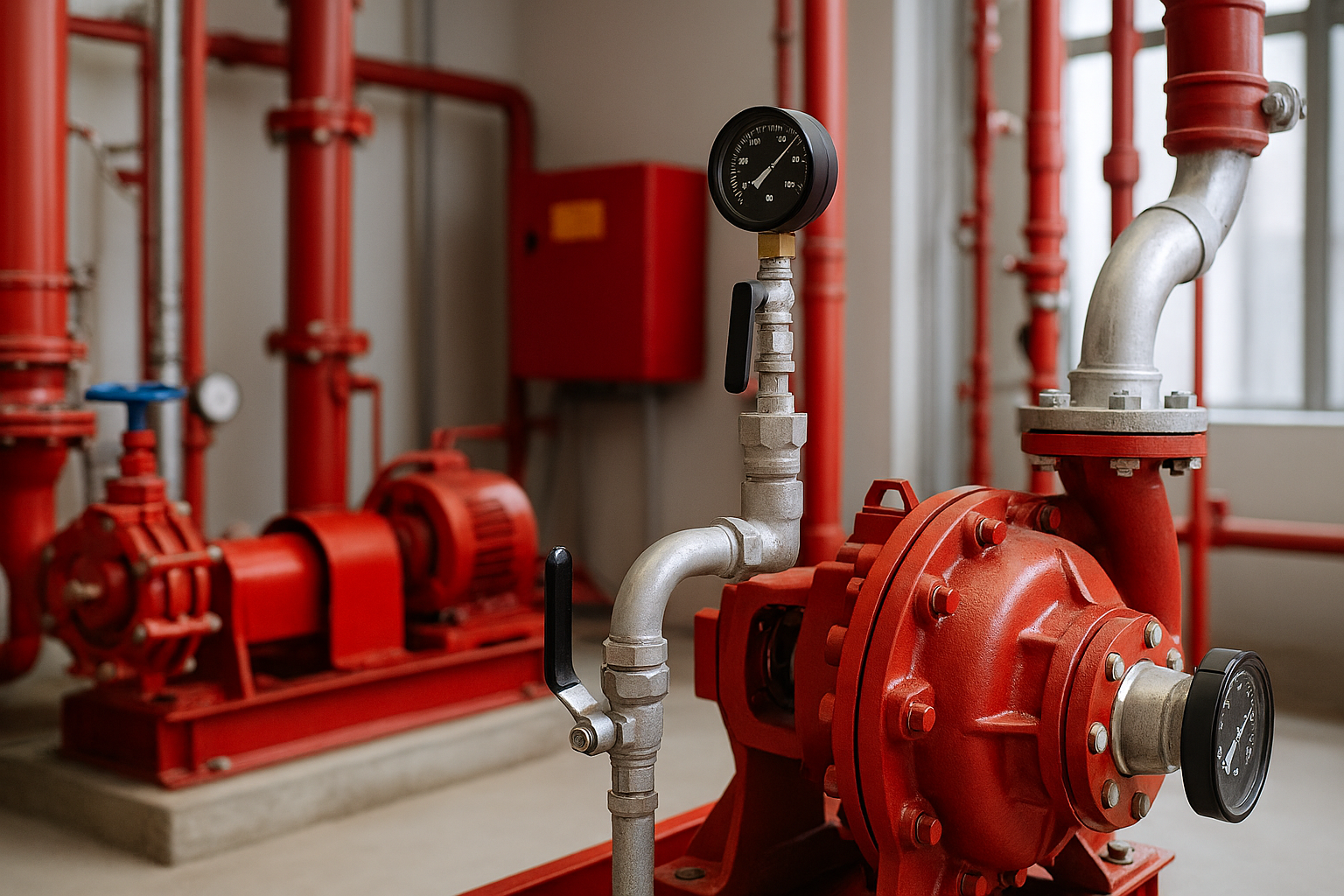
This article outlines the key requirements for annual flow testing of fire pump systems and associated components. It highlights the procedures for both constant-speed and variable-speed fire pumps, as well as the inspection and testing of water mist systems, valves, and supporting equipment.
Let’s dive into the general NFPA requirements:
1. Each constant speed fire pump assembly must undergo an annual test by qualified personnel. This test covers:
- No-flow (churn) condition,
- Rated flow,
- 150% of the pump’s rated capacity flow,
- All tests must be conducted by controlling the quantity of discharged water through approved test devices
2. For variable-speed fire pump assemblies, similar annual testing covers multiple operating points (0%, 25%, 50%, 75%, 100%, 125%, and 150% of rated flow).
3. Testing arrangements must cycle between two acceptable arrangements every three years.
Water Mist Systems & Components
- Control equipment for water mist systems must be tested annually in accordance with NFPA 72.
- Annual operational testing of initiating devices for detection is also required, following NFPA 72.
- Interlocks associated with fuel or lubrication systems must be verified annually, if required.
- Water recirculation tanks require annual testing of float-operated valves and backflow prevention devices per the manufacturer’s instructions.
- The water supply source must be tested annually to verify pressure, flow, quantity, and duration.
System Valves and Accessories
Automatic air pressure maintenance devices shall be tested yearly, typically at the time of the annual preaction valve trip test and in accordance with the manufacturer’s instructions.
General Guidance
The annual tests are to be conducted by qualified personnel using manufacturer’s instructions and performance criteria as specified in NFPA 25.
For a complete overview of requirements and testing methods, NFPA 25 Chapter 8 (fire pumps), Chapter 12 (water mist systems), and Chapter 13 (common components/valves) offer step-by-step details on the annual testing procedures.
Regular annual testing is essential to ensure that fire protection systems operate as intended under emergency conditions. By adhering to NFPA 25 requirements and following manufacturer guidelines, facilities can maintain optimal system performance and reliability.
These tests also help identify wear, degradation, or hidden issues before they lead to system failure. Consistent inspection and verification not only support regulatory compliance but also play a critical role in protecting personnel, assets, and operations. Ultimately, a well-maintained and properly tested system provides confidence that it will perform effectively when it is needed most.