
Ruhrpumpen’s Spotlight
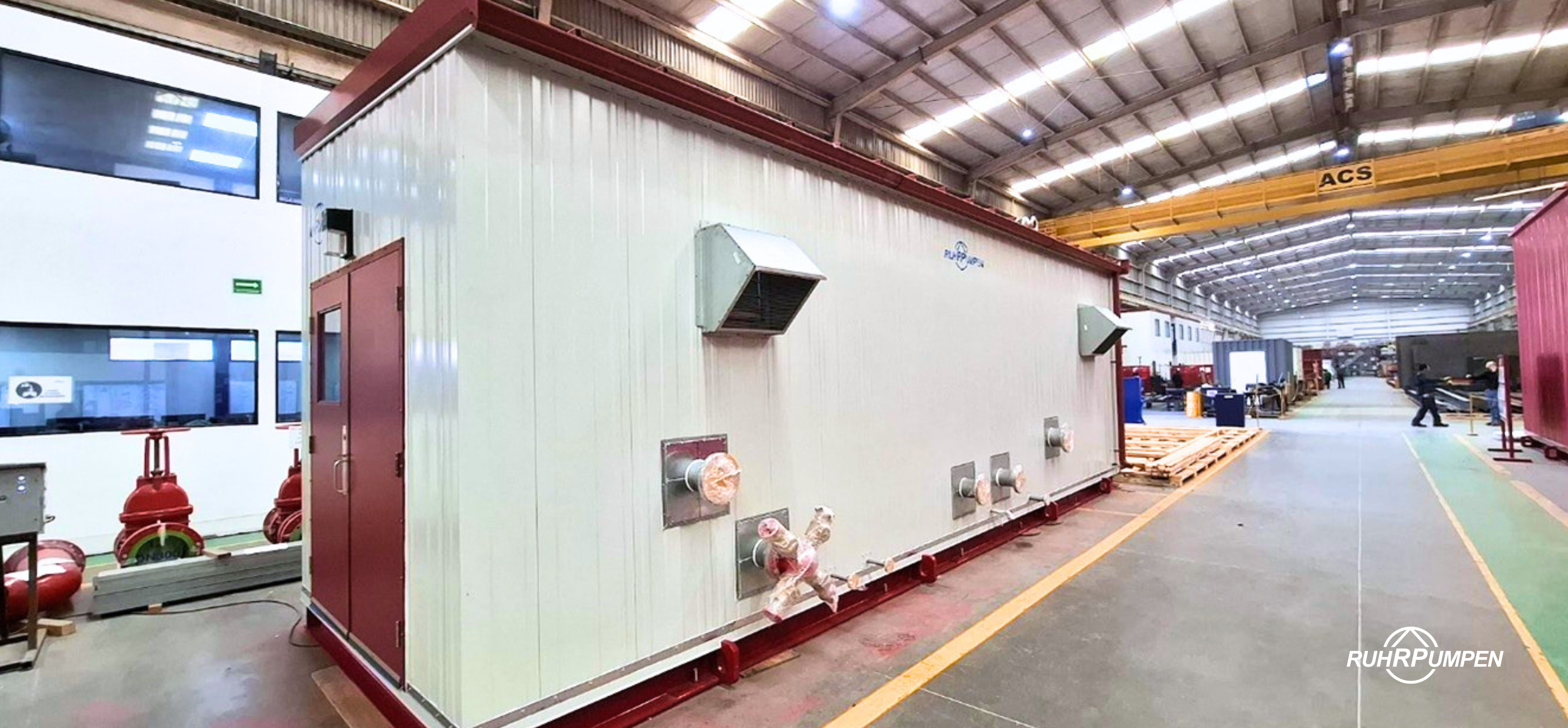
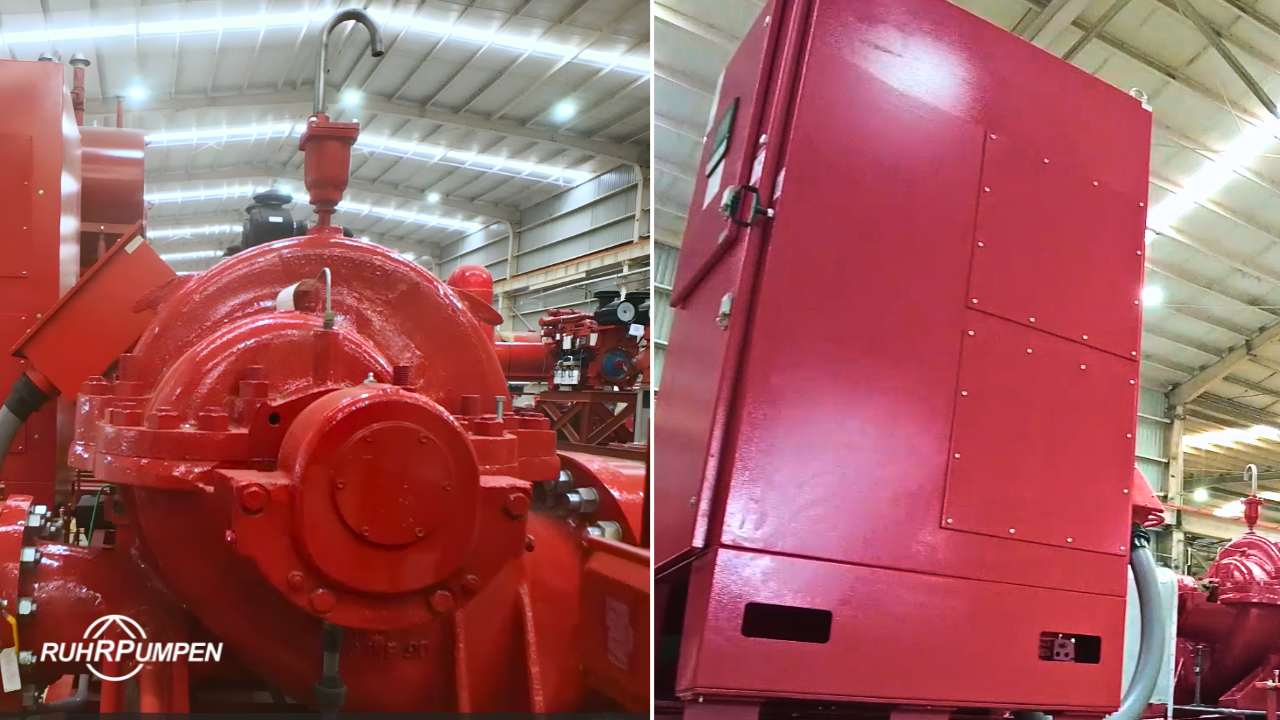
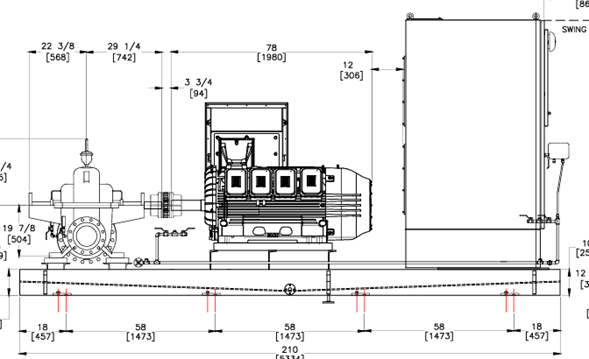
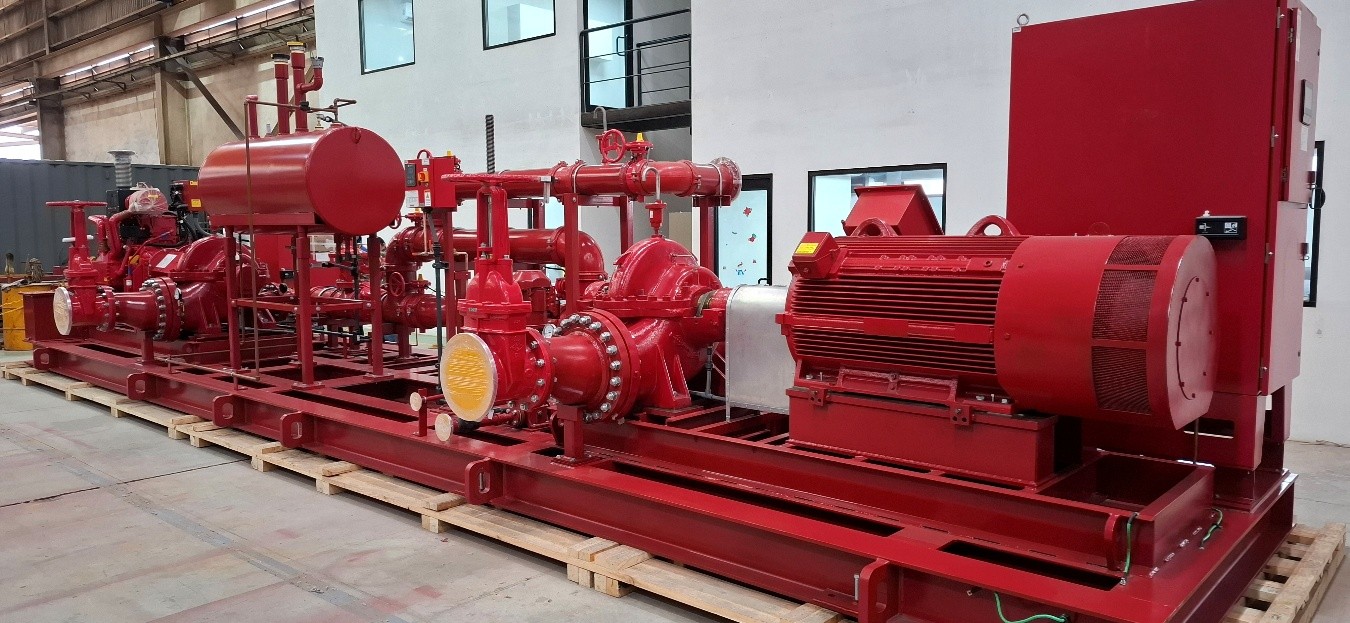
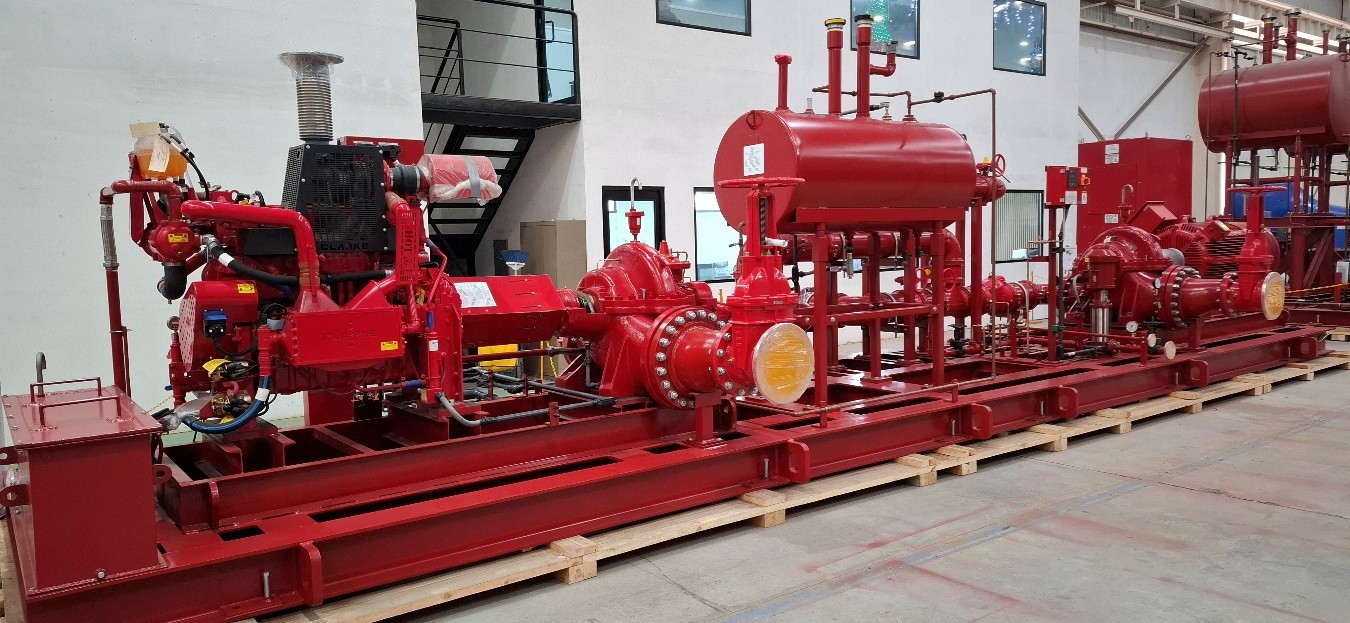
This project consists of an ETL-listed pre-engineered fire protection package designed to deliver a rated capacity of 1,000 GPM at approximately 100 psi, supplied as a complete pump house system integrating an electric motor–driven fire pump, a diesel engine–driven fire pump, and a jockey pump. The packaged system is designed for a maximum working pressure of 250 psi and includes common power distribution at 480 VAC / 60 Hz, with structural welding performed in accordance with AWS D1.1 standards. The prefabricated pump house package measures approximately 370 in. in length, 116 in. in width, and 120 in. in height, providing a compact and fully integrated fire protection solution.
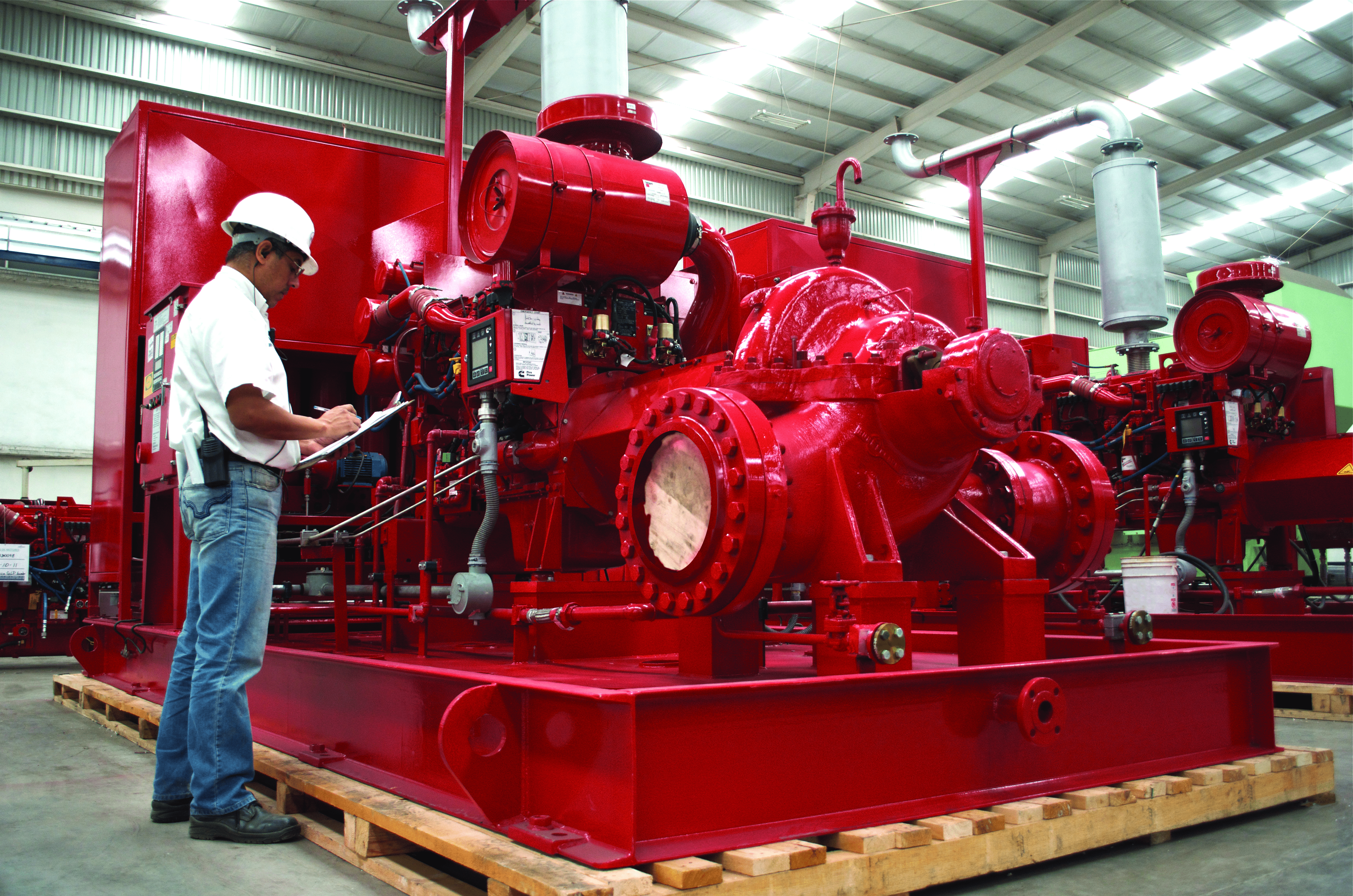
The electric fire pump is based on a BB1 horizontal split-case pump (HSD 8×6×9) designed according to Hydraulic Institute standards and constructed with duplex materials and a Nitronic 50 shaft to provide enhanced corrosion resistance and mechanical reliability. The pump is rated for 1,000 GPM at 100 psi and includes 150# RF suction and discharge flanges, grease-lubricated bearings, standard packing with an internal recirculation seal plan, and NFPA 20–compliant accessories such as pressure gauges, air release valves, and a pressure relief valve. The unit is driven by a UL-listed 100 HP electric motor operating at 3600 RPM, 480 V, 3-phase, TEFC enclosure, and coupled through a flexible UL-listed coupling mounted on a steel baseplate.
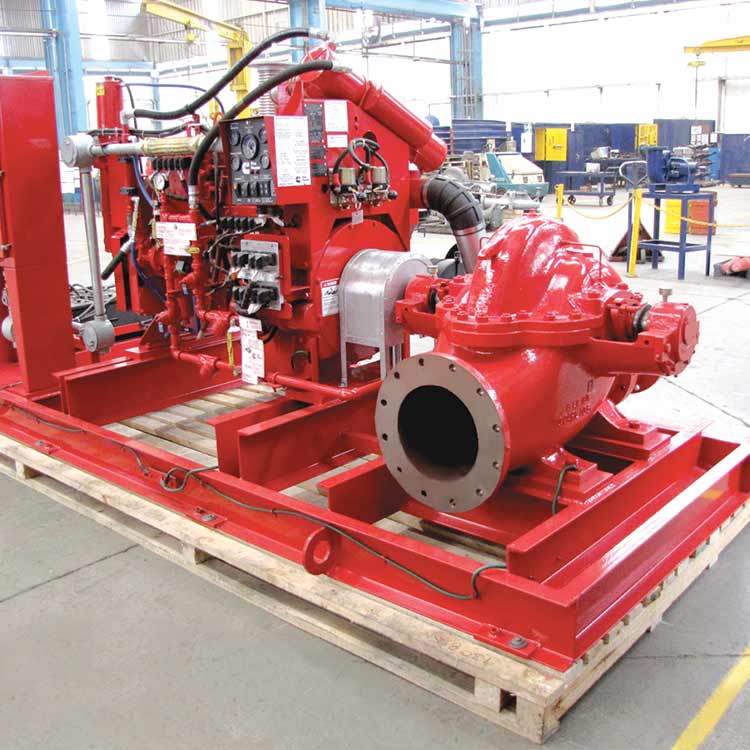
The diesel fire pump system utilizes a ZW 8×5×12 horizontal split-case pump (BB1 type) constructed with duplex casing and impeller materials, Nitronic 50 shafting, and 300# RF flanged connections. The pump operates at the same 1,000 GPM capacity with approximately 100 psi discharge pressure, and incorporates grease-lubricated bearing housings, packing seals with recirculation flush plan, hose valve header connections, and UL/FM-approved accessories including a main relief valve, air release and vacuum breaker valve, waste cone, and FM-approved flow meter. The pump is driven by a UL/FM-approved diesel engine rated at 130 HP at 2350 RPM, configured with tropicalization protection, flexible exhaust, cooling loop, jacket water heater, and a UL-142 listed double-wall diesel fuel tank with leak detection and associated accessories to meet fire protection and operational requirements in elevated temperature and altitude conditions.
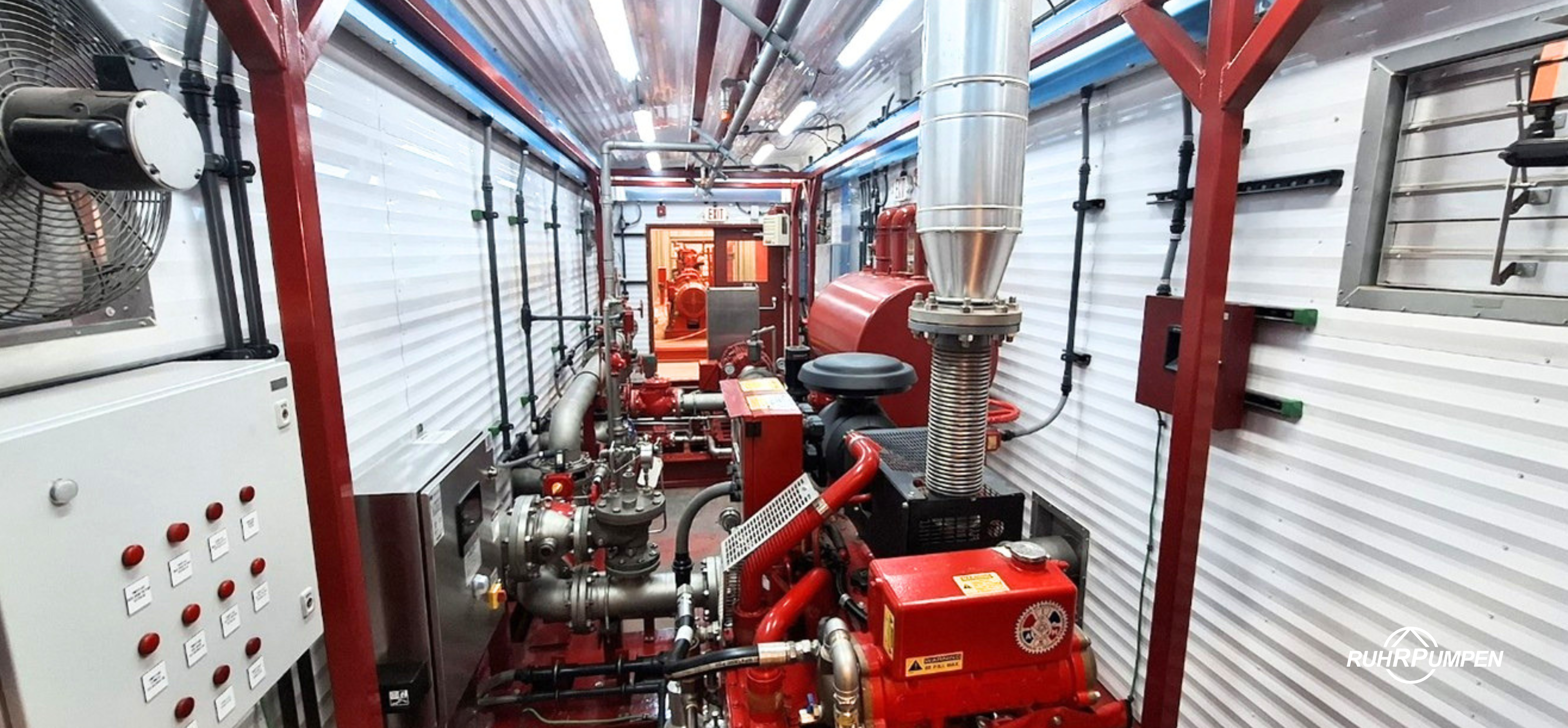
Complementing the fire pump systems, the package includes a vertical inline jockey pump (CR series) rated at approximately 25 GPM at 147 psi, driven by a 3.7 kW electric motor at 3450 RPM, 460 V, 3-phase, used to maintain system pressure and minimize unnecessary fire pump starts. Control and operation of the system are managed through UL/FM-approved Tornatech fire pump controllers housed in NEMA 4X stainless steel enclosures, designed for high ambient temperatures and corrosive environments, and equipped with NFPA 20–compliant alarms, monitoring, and anti-condensation protection.
The system also includes certified instrumentation, pressure and compound gauges with Monel internals, corrosion-resistant coatings rated for C5 environments, and comprehensive testing such as hydraulic performance testing, hydrostatic testing, and rotor balancing to ensure long-term reliability and compliance with fire protection standards.

Are you looking for Fire Pumps and Systems to cover your pumping needs? Let Ruhrpumpen help solve your pumping demands.
Contact us now by clicking here.

Ruhrpumpen’s Safety Tip
In industrial environments, the reliability of firefighting systems isn’t just a compliance requirement—it’s a critical safeguard for people, equipment, and operations. At the heart of these systems are fire pumps, whose performance during an emergency can determine how effectively a fire is contained or extinguished. But ensuring that these pumps operate flawlessly isn’t a one‑time task—it requires consistent attention to electrical integrity, backup power readiness, and environmental conditions that affect equipment performance.
In this post, we highlight essential safety checks every facility should incorporate into its fire pump maintenance program. From testing automatic transfer switches under real load conditions to combating hidden moisture inside controller enclosures, these steps help ensure your fire pump is ready when it matters most. We’ll also cover voltage stability considerations in heavy‑demand environments, the importance of exercising backup generators, and why proper grounding and bonding are non‑negotiable for safe, reliable fire pump operation.
Let’s dive into the key practices that keep your fire protection infrastructure resilient and emergency‑ready.
1. Test Automatic Transfer Switches Under Load
Industrial facilities with electric fire pumps must verify automatic transfer switches (ATS) operate seamlessly during power loss. Conduct functional testing to ensure the fire pump transfers to emergency power without delay.
2. Inspect Controller Enclosures for Condensation
Temperature fluctuations can create moisture inside control panels. Condensation can corrode terminals and cause electrical faults, so inspect and address humidity control measures.
3. Review Voltage Stability
Heavy industrial equipment can create voltage drops or fluctuations. Coordinate with electrical teams to confirm fire pump feeders maintain stable voltage under peak plant demand.
4. Exercise Backup Generators
Where generators supply fire pumps, perform routine load tests to confirm readiness. Fuel supply, cooling systems, and start sequences must be verified regularly.
5. Confirm Proper Grounding and Bonding
Loose or corroded grounding connections can compromise safety and equipment protection. Inspect and tighten all grounding conductors serving pump controllers and motors.
Keeping fire pump systems in peak condition isn’t just a maintenance task—it’s a critical investment in operational safety and resilience. By routinely testing transfer switches, monitoring environmental conditions inside control panels, verifying voltage stability, exercising backup generators, and ensuring all grounding and bonding connections are solid, facilities can significantly reduce the risk of failure during an emergency.
Reliable fire protection starts long before an alarm sounds. With consistent attention and a proactive maintenance program, your fire pump system will be ready to perform when lives, assets, and business continuity depend on it.

Ruhrpumpen’s Fire Campus
Industrial facilities handling flammable liquids, combustible gases, LNG, or high-temperature processes face elevated fire risks where system failure is simply not an option. In these environments, fire pump design must go beyond minimum compliance and focus on reliability under worst-case fire scenarios.
NFPA 20 requires fire pumps to meet the maximum system demand (Section 4.7), ensuring the pump is capable of supplying all connected fire protection systems operating simultaneously. Additionally, Chapter 4 requires pumps to perform at 150% of rated flow while maintaining at least 65% of rated pressure, providing a built-in performance margin during peak demand conditions.
The standard also addresses installations with multiple fire pumps (Section 4.21), establishing requirements for proper arrangement and operation when more than one pump is provided. While redundancy is not mandated in every installation, NFPA 20’s emphasis on reliability and continuous operation during fire events strongly supports dual-pump configurations in high-hazard occupancies.
Power supply reliability is equally critical. Chapters 9 and 10 require dependable power sources for electric-driven pumps and permit diesel-driven fire pumps as an alternative where electrical reliability may be compromised. In high-risk industrial settings, combining electric and diesel drivers is a common approach to ensure uninterrupted fire protection.
NFPA 20 is built on one core principle: the fire pump must operate when needed. In high-risk industrial facilities, incorporating redundancy through multiple pumps, independent power sources, or alternative drivers aligns directly with the intent of the standard and strengthens overall fire protection resilience.
When it comes to Firefighting Systems, Ruhrpumpen Fire Pumps and Systems are among the top options you can trust to meet your pumping needs. From horizontal and vertical pumps, to complete pre-packaged fire systems, Ruhrpumpen solutions meet today's safety requirements and are backed by NFPA, UL and FM certifications and qualifications.
See the Full range of Fire Pumps and Systems here

Ruhrpumpen's Spotlight
We’re pleased to share a summary of a pre-engineered, UL/FM compliant fire protection pump house system designed to deliver reliable, code-compliant performance for critical facilities. The ETL-listed packaged pump house is engineered in accordance with NFPA 20, NFPA 13, and NFPA 72, with a total system capacity of 2000 GPM, a rated pressure of 110 psig, and a maximum working pressure of 250 PSI. The package includes two electric motor–driven main fire pumps and one jockey pump, all fully integrated to simplify installation and commissioning.
The main fire pumps are BB1, between-bearings, single-stage, axially split units (Model ZW 10x8x18 F), UL Listed and FM Approved, featuring cast iron casings with 316 stainless steel impellers, shaft sleeves, and case wear rings. The pumps are configured with packed shaft sealing and a Plan 7311 seal flush, grease-lubricated bearings with lip seals, and counter-clockwise rotation viewed from the driven end. Each pump is driven by a 250 HP, 1750 RPM UL-listed electric fire pump motor, operating at 480 V, 3-phase, 60 Hz, with TEFC enclosures and paired with UL/FM approved Tornatech controllers housed in NEMA 2 enclosures, complete with alarms, contacts, and motor heater connections.
System piping is supplied in carbon steel and includes individual suction and discharge lines with UL/FM OS&Y gate valves, swing check valves, and butterfly valves, as well as circulation relief piping. A complete flow test loop, hose valve header, and UL/FM approved flowmeter are included to support acceptance testing and long-term maintenance. The jockey pump is a vertical inline multistage unit rated at 20 GPM @ 120 psi, driven by a 3 HP electric motor with a UL-listed jockey pump controller.

The pump house structure is a fully insulated steel enclosure with a shed-style roof, engineered for wind loading and anchor bolt reactions, and equipped with multiple access doors, removable roof panels, and defined pipe penetrations. Electrical and auxiliary systems include a common power distribution panel, transformer, fire alarm and control panel, ventilation system, unit heaters, lighting, grounding, and cable management—all supplied as part of a turnkey package. The complete system undergoes hydrostatic, mechanical, and certified performance testing in accordance with Hydraulic Institute standards, providing customers and project teams with a robust, fully tested fire protection solution built for long-term reliability and compliance.
Are you looking for Fire Pumps and Systems to cover your pumping needs? Let Ruhrpumpen help solve your pumping demands.
See the Full range of Fire Pumps and Systems here

Ruhrpumpen’s Fire Campus
NFPA 20, Standard for the Installation of Stationary Fire Pumps for Fire Protection, establishes the minimum requirements for the selection, installation, and performance of fire pump systems. When electric motors are used to drive fire pumps, NFPA 20 places strict emphasis on reliability, electrical safety, and continuity of operation during fire conditions. While NFPA 20 does not define motor voltage classes such as “medium voltage” or “high voltage,” it references voltage thresholds and defers many electrical installation requirements to NFPA 70 (NEC).
NFPA 20 permits electric motors as prime movers for fire pumps provided they are specifically listed and approved for fire pump service. The standard requires that electric motor–driven fire pumps be supplied by a reliable power source and that the electrical system be designed to minimize the possibility of interruption during a fire event. The voltage rating of the motor directly influences how the electrical supply and protection systems are designed and installed.
In practice, medium-voltage fire pump motors typically operate above 1,000 V AC and are used where pump horsepower requirements exceed the practical limits of low-voltage motors. NFPA 20 allows the use of medium-voltage motors provided the entire electrical system—including controllers, feeders, disconnecting means, and overcurrent protection—is suitable for the voltage and arranged to ensure reliable starting and operation.
NFPA 20 requires that fire pump controllers be listed for the voltage and horsepower of the motor. For medium-voltage systems, this often results in the use of reduced-voltage or across-the-line medium-voltage controllers specifically designed and listed for fire pump duty.
NFPA 20 recognizes that electric fire pump motors may be supplied from systems exceeding 1,000 V AC, but it does not provide detailed electrical installation rules for these voltages. Instead, NFPA 20 explicitly relies on NFPA 70 (NEC) for conductor sizing, insulation requirements, grounding, clearances, and disconnecting means for over-1,000-volt systems.
The intent of NFPA 20 is that high-voltage fire pump installations achieve the same or higher level of reliability as low-voltage systems, while maintaining adequate protection against fire, electrical faults, and mechanical failure.
Let us know if this information was useful for your engineering operation!
Ruhrpumpen's Spotlight
ETL-Listed fire protection system, designed in accordance with NFPA 20, integrating an electric main fire pump, a diesel main fire pump, and a jockey pump. The HSC 8×14×21E BB1-type main fire pumps are UL Listed and FM Approved, featuring a ductile iron casing, 316 stainless steel impeller, 316 stainless steel casing wear ring, and an AISI 4140 steel shaft, ensuring high mechanical reliability.
150-lb RF suction and discharge flanges, threaded drains and vents, UL/FM-listed instrumentation, and automatic air release valves are provided, fully complying with NFPA 20 requirements.
The electric drive consists of a 350 HP motor @ 1800 rpm, 4160 V, 60 Hz, three-phase, with a 1.15 service factor, Class F insulation, and Class B temperature rise. The assembly is coupled through a flexible coupling with OSHA-compliant guard and is supplied with a UL/FM-listed NEMA 4X fire pump controller, tropicalized and suitable for corrosive environments.
The diesel system incorporates a Clarke engine rated 376 HP @ 1760 rpm (Tier 3), equipped with a freshwater cooling system, residential-grade exhaust with muffler, 12 VDC electrical system, batteries, UL-listed driveshaft with guard, and a structural base. Fuel supply is provided by a UL-142 double-wall diesel tank, 250 gallons, with emergency venting and leak detection.
The vertical multistage jockey pump, designed to maintain system pressure, delivers 20 GPM @ 160 psi and is equipped with a mechanical seal, 1.5 HP TEFC electric motor, UL-Listed control panel with NEMA 4X enclosure, and dedicated instrumentation, ensuring controlled starts and overall system stability.
When every second counts, reliability isn’t optional—it’s engineered. Our 2000 GPM @ 150 psig pre‑engineered fire pump system delivers uncompromising performance through ETL‑listed integration, premium UL/FM‑approved components, and full NFPA 20 compliance.
With robust electric and diesel configurations, advanced control systems, and precision‑built pumping technology, this solution ensures your facility stays protected under the most demanding conditions. When you choose our fire protection systems, you’re not just meeting industry standards—you’re exceeding them with confidence, efficiency, and long-term peace of mind.
Protect what matters. Choose engineering that never compromises.
Are you looking for Fire Pumps and Systems to cover your pumping needs? Let Ruhrpumpen help solve your pumping demands.
Contact us now by clicking here.